Play a chapter's case study games: take a role, finish missions and earn points
Your teacher's case study games turn a chapter into missions. Take a role, solve problems for points, and press Hint when you are stuck.
Every screen in the films is the real product, shown on a demo school made for them.
Some students learn best by doing. A case study game gives you a role in a story, and the chapter's questions become missions to finish, one after another. Right answers earn points, and when you are stuck there is a hint to get you moving again.
The film plays a case study on Class 10 Science, Acids, Bases and Salts: it opens the case studies the teacher set, starts the first mission, answers a problem, and takes a hint on another.
Step by step
Open Case study games
On a chapter, scroll down and press Case study games. You see the case studies your teacher set for it. Press How this works: each one gives you a role, and the questions come as missions.
Watch from 0:00Start a case study
Press Start on a case study. Its page lists the missions, the problems and the points you can earn. Scroll down to see the missions in order, then press Start mission.
Watch from 0:27One mission at a time
Only the first mission is open; the next unlocks once you finish the one before. Press Start mission on the first.
Watch from 0:41Read the briefing
The mission briefing sets the story for the problems that follow, so read it before you start answering.
Watch from 0:41Answer a problem
Read the problem, pick your answer and press Submit answer. A right answer says so, earns the problem's points and gets a tick on the list.
Watch from 0:58Take a hint
Stuck on another problem? Press it on the list, then press Hint for help with it.
Watch from 1:13
Good to know
Points are not marks
Case studies are not marked. The points belong to the game; they do not go into your results.
Your teacher sees how far you got
On the teacher's side, the results show how far each student got, the missions and problems done, and the time spent.
What was on screen
A demo school and its demo student, on Class 10 Science, Acids, Bases and Salts.
Questions
- What are case study games?
- Games your teacher sets on a chapter. You take a role and answer the chapter's problems as missions, one at a time, earning points.
- Do case study points count towards my marks?
- No. Case studies are not marked; the points are part of the game.
- What if I get stuck on a problem?
- Press the problem on the list, then Hint.
What the film saysThe narration, scene by scene.
Case study games. This is the student dashboard, on a chapter. Scroll down, and press Case study games.
Set by your teacher. Here are the case studies your teacher set. Press How this works.
Play a role. Each one gives you a role. You answer the chapter's questions as missions.
Start. On a case study, press Start.
Missions and points. It shows its missions, its problems, and the points you can earn. Scroll down for the missions, in order.
Start mission. Then press Start mission.
One mission at a time. The first mission is open. The next one opens when you finish it.
Mission 1. On the first mission, press Start mission.
The story. Read the mission briefing: it sets the story.
A problem. Then read the problem. Pick your answer, and press Submit answer.
Points earned. If it is right, it says so. You earn its points, and it is ticked on the list.
A hint. Stuck on another one? Press it on the list. Then press Hint.
Coming up. Next: a graded assignment.
Watch next
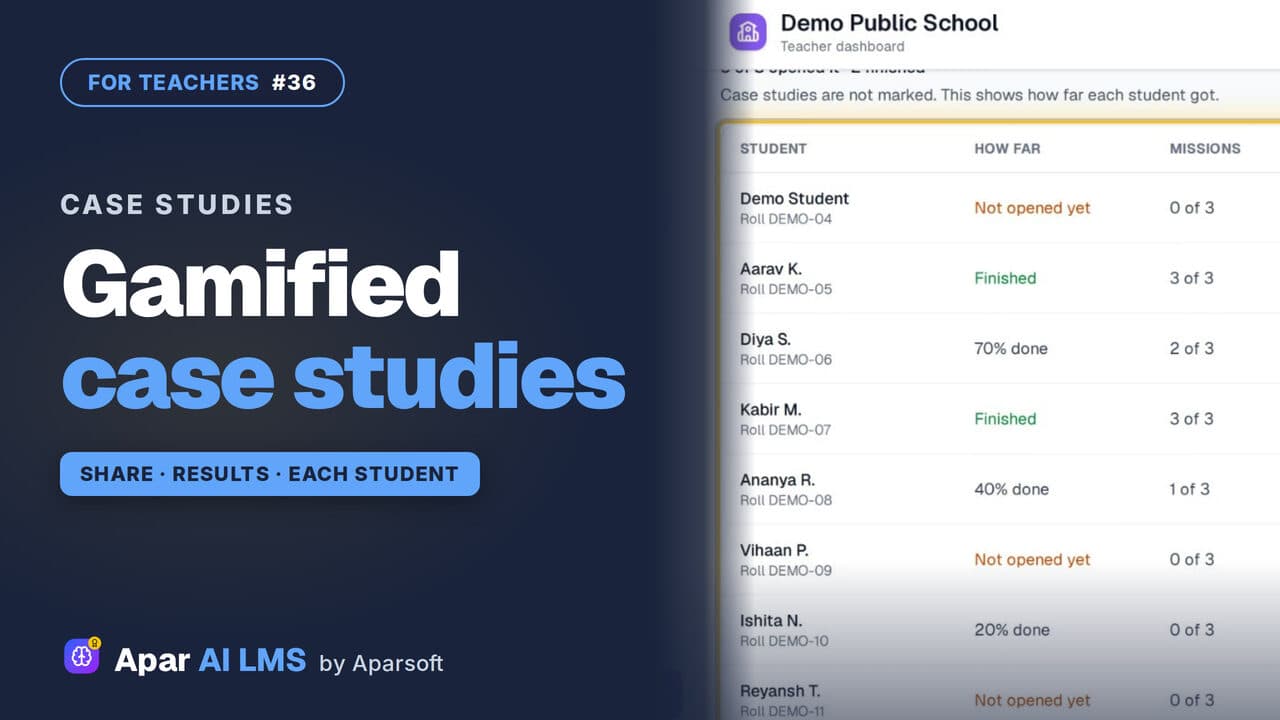 Length1:22#36 · Teachers
Gamified Case Studies: Share, See Results
Each case study gives students a role and missions. Preview one, share it with your class, and see how far every student got.
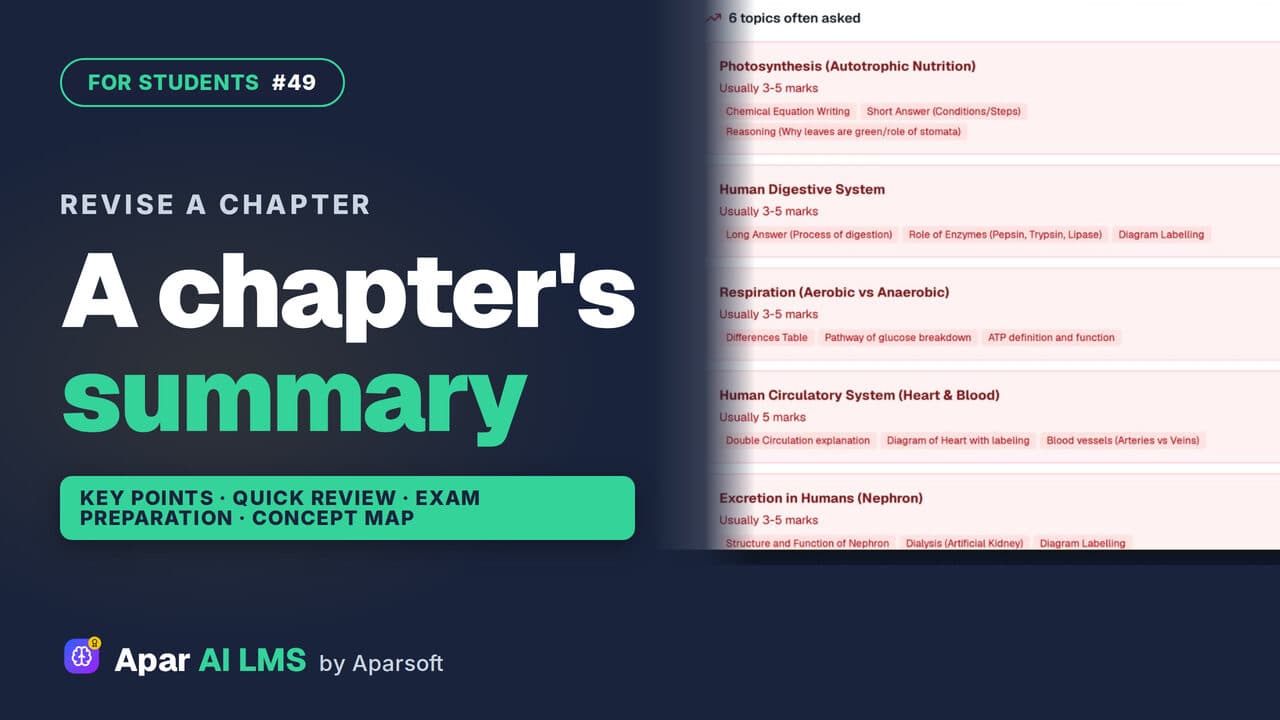 Length1:25#49 · Students
Chapter Summary and Concept Map for Revision
Revise a chapter kind by kind: key points, a quick review, exam preparation, the main concepts, and a concept map of how its ideas connect.
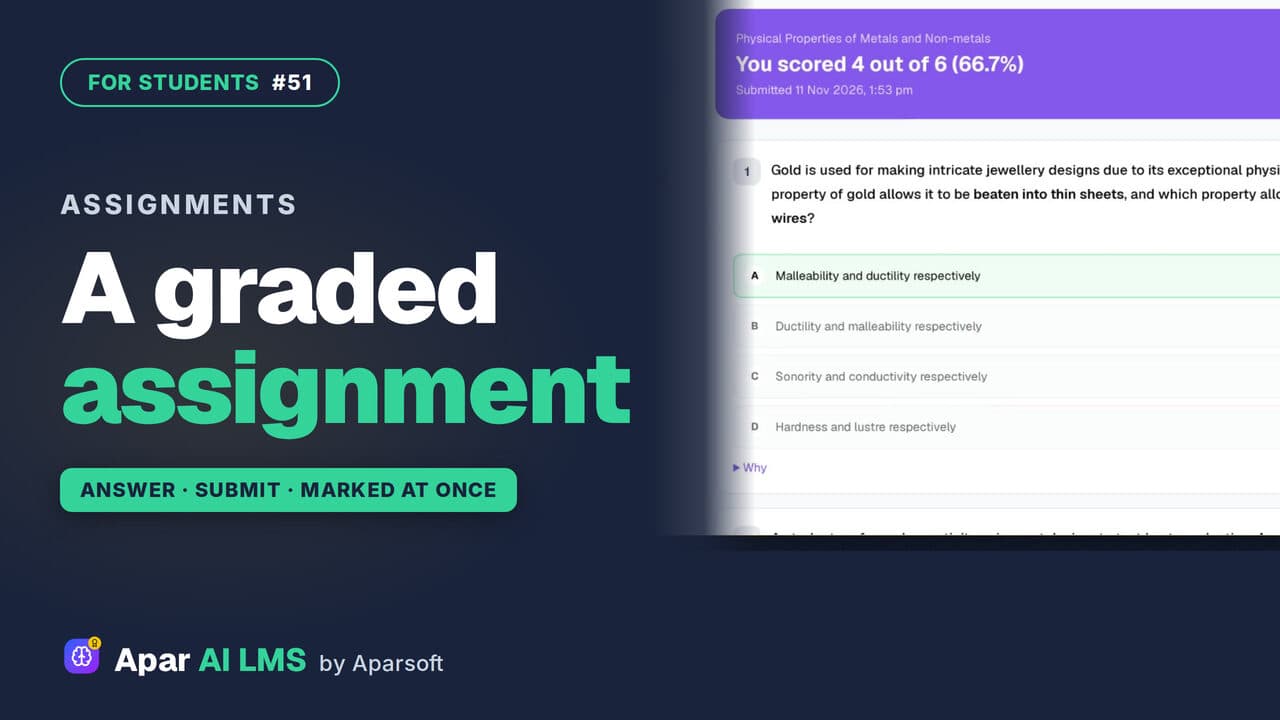 Length1:33#51 · Students
Graded Assignment: Answer, Submit, See Marks
Graded work your teacher set: one attempt, answers saved as you go, marked as soon as you submit, with the reason for every wrong answer.
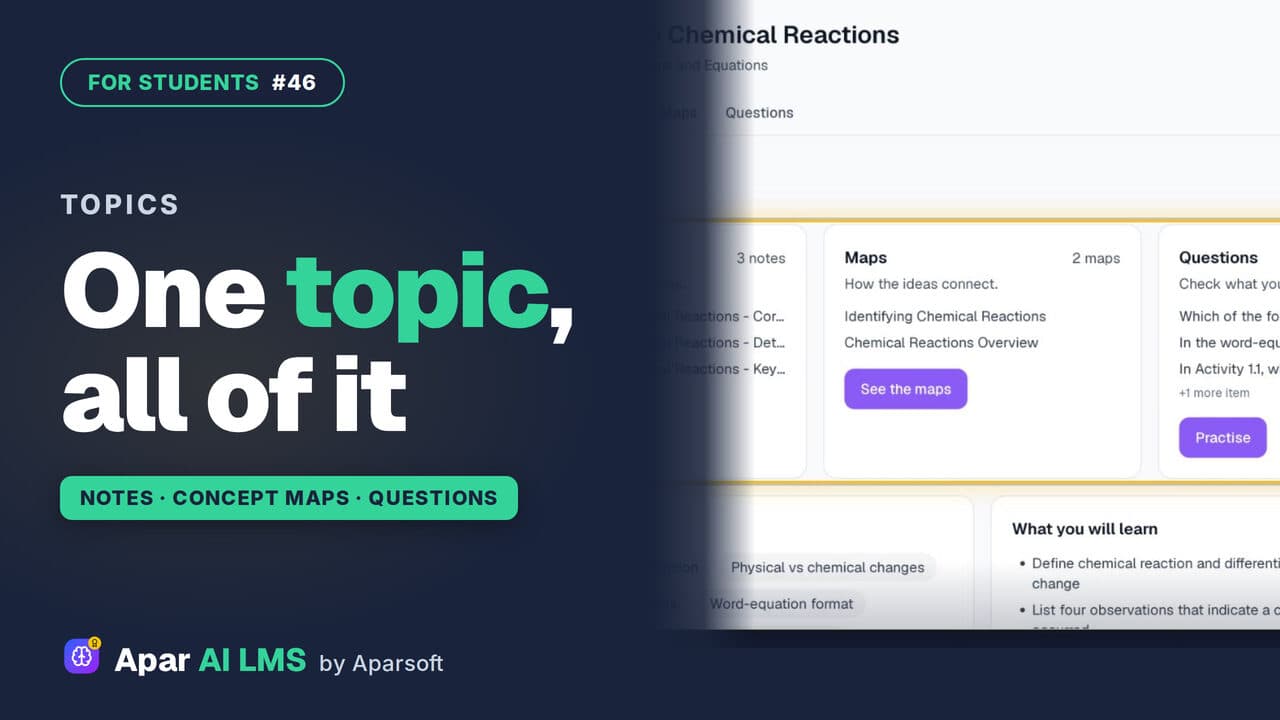 Length1:13#46 · Students
Topic Notes, Concept Maps and Practice
One topic at a time: short notes, concept maps of how the ideas connect, and practice questions that show at once if you got it right.
Try it on your own school
Start the 2-month free trial. No payment.
- No payment
- No commitment
- Onboarding included